1. What is natto?
Natto is a unique traditional dish of the Japanese. It is made from whole soybeans that are not peeled. Soybeans will be boiled and fermented with Bacillus subtilis in a 40°C environment for 14-18 hours to become brown soybeans called natto. In 1980, Japanese scientist Dr. Sumi Hiroyuki at the University of Chicago’s School of Medicine discovered that Nattokinase found in Natto could dissolve artificial fibrin (an insoluble protein that leads to blood clot formation)
- Natto contains many beneficial enzymes and minerals such as nattokinase, pyrazine, vitamins K1, K2, daidzein, genistein, infrabin, and more.
- Pyrazine gives natto its characteristic smell and helps prevent atherosclerosis.
- The enzyme nattokinase cleans blood vessels, dissolves blood clots, and helps prevent thrombosis, heart attacks, strokes, and lung diseases.
- Natto contains a lot of vitamins K1 and K2, which support calcium absorption for bone formation. Every 100g of natto provides 870 micrograms of vitamin K2.
- Natto contains many chemical compounds that prevent cancer, such as daidzein, genistein, and infrabin.
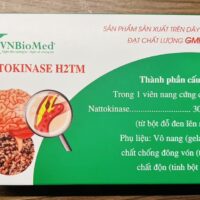
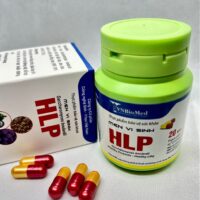
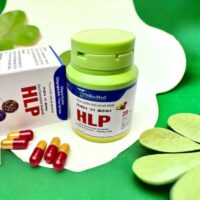
Nattokinase H2TM is a natto fermentation product made from black beans. Traditionally, natto was primarily produced from fermented soybeans. However, recent studies have increasingly focused on natto fermented from black beans, revealing that this version has several advantages over soybean-based natto. Specifically:
- According to Dajanta et al. [K. Dajanta et al., 2013], black bean natto has higher antioxidant activity than yellow soybean natto. The amount of aglycone daidzein and genistein isoflavones in black bean natto is higher compared to unfermented black beans [P. Astuti, 2014].
- Daidzein isoflavone has a chemical structure similar to estrogen, leading to high estrogenic activity [L. Zhang, S. Cui, 2009].
- Weber et al. and J.E. Chavarro et al. found that a diet high in isoflavones using yellow soybeans is associated with lower sperm quality [K. Weber et al., 2001; J.E. Chavarro et al., 2008].
- According to research by Abdul Gofur and Sri Rahayu Lestari (2016), black bean natto extract helps increase testosterone levels and improve sperm density and motility in rats.
Black beans do not contain allergens, so people who are allergic to soybean components can safely consume H2TM natto
2. Health Benefit of Nattokinase
Support Blood Pressure Reduction
A clinical study by Jensen GS et al. (2016) evaluated the effectiveness of Nattokinase in treating hypertension. 79 participants with diagnosed high blood pressure were given 100 mg of Nattokinase daily for eight weeks. The results showed that Nattokinase reduced both systolic and diastolic blood pressure in both genders, with a stronger effect observed in men. Another study involved 86 participants aged 20 to 80 years with initial diastolic blood pressure ranging from 130 to 159 mmHg. The group that took Nattokinase 2000FU per capsule for eight weeks experienced a greater reduction in blood pressure compared to the control group. These studies indicate that Nattokinase plays a significant role in supporting blood pressure reduction.
Increses Good Cholesterol – HDL
According to research by Ren NN et al., two groups of patients were studied: one group took Nattokinase and the other took statin cholesterol-lowering drugs. Eighty-two participants were involved in the trial, which lasted 26 days. The Nattokinase group received a dosage of 6000 FU per day, while the statin group (simvastatin) received a dosage of 20 mg per day (Ren NN et al., 2017). The results showed that both groups experienced a reduction in total cholesterol, bad cholesterol – LDL, and triglycerides. However, the Nattokinase group also saw an increase in good cholesterol – HDL.
Prevents Deep Vein Thrombosis (DVT)
Deep vein thrombosis is understood as a blood clot that appears in the deep veins, often in the legs. It can affect the condition of obesity in older adults and those with underlying circulatory issues. In 2015, a study published in the journal Scientific Reports found that taking 100 mg of Nattokinase could break down fibrin (a type of protein involved in blood clotting) more effectively than a placebo. Additionally, Nattokinase helps reduce the concentration of blood-clotting proteins, acting as a potent anticoagulant (Kurosawa, Y., et al., 2015).
Prevents Atherosclerosis
According to a 2015 study in the journal Stroke, an experiment on mice involved three doses of Nattokinase injections before inducing a stroke. The results showed improved blood flow to the brain after the stroke, with smaller blood vessels in the brain not becoming obstructed, limiting the spread of tissue damage. Daily supplementation of Nattokinase helped reduce arterial plaque by 36.6%, better than statin treatment, which reduced plaque by 11.5%.
Prevents Stroke
In a study on 79 hypertensive patients, vWF (Von Willebrand Factor – a glycoprotein involved in the blood clotting process) was reduced by 15% in the Nattokinase group, compared to no consistent changes in the placebo group over eight weeks (Jensen GS et al., 2016). These results demonstrate the benefits of Nattokinase in reducing the risk of blood clot formation and preventing strokes.
Improves Sinus Health
Chronic sinusitis is a persistent inflammation in the sinuses that can be caused by asthma, allergies, bacteria, or fungal infections. It affects daily activities and quality of life, and severe cases may require nasal surgery. Research shows that Nattokinase can improve nasal ventilation by shrinking nasal polyps that cause obstruction and thinning mucus. These effects make Nattokinase a candidate for treating respiratory conditions like bronchitis and chronic obstructive pulmonary disease (COPD).
Improves Gut Health and Metabolism
Poor gut health can weaken the immune system and increase the risk of chronic diseases such as obesity, diabetes, rheumatoid arthritis, heart disease, and cancer.
Nattokinase has probiotic properties that can enhance metabolism and reduce body fat, potentially preventing and managing metabolic disorders like obesity and diabetes. It promotes a healthy balance of gut bacteria, also known as the human microbiome.
3. Nattokinase Dosage
Nattokinase dosage is typically indicated in fibrin units, abbreviated as FU. The maximum safe dose is 3,000 FU, not to be exceeded for more than 26 weeks. Nattokinase is usually available in capsule and tablet forms and can be included in your daily diet. Natto is known for its strong aroma and sticky texture, being rich in fiber and providing over 20% of the daily recommended intake of iron, magnesium, calcium, vitamin C, and potassium. A one-cup serving of Natto contains approximately 371 calories, which accounts for one-fifth of a 2,000-calorie daily diet.
Restricted Use for Certain Individuals
Despite its many benefits, Nattokinase may have undesirable effects on certain individuals:
- Nattokinase can worsen symptoms in people with bleeding disorders.
- It can cause dizziness, headache, and even fainting in those with low blood pressure.
- Nattokinase may increase bleeding and bruising in people taking blood thinners.
- It can enhance the effects of blood pressure medications such as ACE inhibitors and calcium channel blockers, potentially causing severe drops in blood pressure.
Cautions When Using Nattokinase
- Due to insufficient studies on long-term use, Nattokinase should not be used by pregnant women, breastfeeding mothers, and children.
- Avoid using Nattokinase if you have any blood clotting disorders.
- Discontinue Nattokinase use at least two weeks before any surgical procedure.